From the earliest times, the
egg was a symbol of rebirth, new life, in most cultures.
The exchange of
eggs in the springtime is a custom that was centuries old when
Easter was first celebrated by Christians.
Starting with
Holy Thursday, people start painting
Easter eggs in a multitude of colors.

These are my
blown eggs (created by piercing the shell with a needle and blowing out the contents).
Transylvania has a mixed population.
Due to the differences between the western churches and the Eastern Orthodox Churches some of us celebrate
Easter twice each year, one after the other. The former now use the Gregorian calendar to calculate the date of
Easter, while the latter still use the original Julian calendar.


These
eggs are just for fun, there is nothing left inside them.
That's why I shall
dye some Easter eggs with onion skins too, the good, old, natural dye.
If you would like to try to hand-paint your Easter eggs, have a look at theses simple
egg painting models and coloring pages.
Easter wetting.
In Transylvania, there is a tradition called
"the wetting", a popular pastime throughout the region.
Every year, on
Easter Monday, the boys, armed with buckets of water are waiting for the girls to come out of their houses. As soon as they appeared, the boys wet them with water. The girls reward the boys who had wet them by giving them the most beautiful decorated
Easter eggs and cake.
Today, this tradition is practiced with more gentility. Boys in the city use perfume to sprinkle on the girls' heads on
Easter Monday.
I wish you and your families
HAPPY EASTER!


 Bunnies and chick are traditional Easter symbols. Boost the Easter spirit with fun family craft activities!


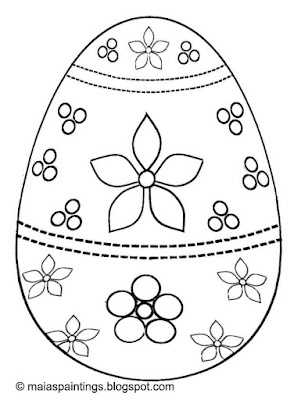
 Here is another coloring page, an Easter egg with flower petals.
 An Easter egg with three flowers, a fun coloring page for children to print out and color with crayons.
 Another coloring page, this time an Easter egg with simple geometrical model.
 Print out these Easter egg images and have fun coloring them.


 Easter egg - Coloring Page for kids with flowers.
 Colorful Easter eggs - printable coloring page for kids.
 Another Easter bunny with a big Easter egg, walking down the road.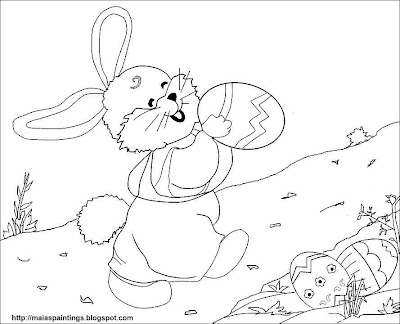
 Easter egg with flowers-coloring page for kids.